Implicit Costs Are Best Described as
An implicit cost represents an opportunity cost. Our course Leading Across Cultures addresses the strategies.

Difference Between Explicit Cost And Implicit Cost Tutor S Tips
They often deal with intangibles and.

. With implicit costs you do not track them like business expenses in your books. In contrast implicit or implied costs are not clearly defined identified or reported as expenses. Explicit costs on the other hand are out-of-pocket expenses where a company.
Course Title AP 100. These are just a handful of ways implicit bias can undermine an organizations performance and potential. With two helper she can produce 450 packets of Senior portrait proofs a month.
Labor and capital costs. This can be because a business may not record implicit costs for the purpose of accounting as funds are not being directly exchanged. Implicit costs are best described as.
The sum of the costs that do not vary with output. Diseconomies of scale occur when long-run. An implicit cost is a cost that exists without the exchange of cash and is not recorded for accounting purposes.
This cost is stated indirectly and or it is already implied in the. An implicit cost represents the amount of income or benefit a company is going to miss out on by choosing to use assets rather than trying to rent or sell them. It represents an opportunity cost that arises when a company uses internal resources toward a project without any explicit compensation for the utilization of resources.
An implicit cost comes from using an asset you already have rather than renting or buying a new one representing an expenditure of resources. An implicit cost is a non-monetary opportunity cost that is the result of a business rather than incurring a direct monetary expense utilizing an asset or resource that it already owns. Total revenue minus both explicit and implicit costs is called economic profit.
In economic activities which are the outflows. This is true with implicit costs as well. Implicit cost is also known as the notional cost imputed cost or implied cost which is defined or described as the opportunity cost that is equal to what a company or business give up so that could use a factor of production for which it owns already and does not require to pay the rent.
The opportunity costs associated with a firms use of resources that it owns. Recognizing unconscious stereotypes is more important than ever for organizations in the 21st century and failure to do so can cost a company dearly on many levels. Implicit cost refers to the opportunity cost of the resources of the business organization also known as notional cost or implied cost where the organization calculates what the business earned if instead of using the resource in the business activity it used the resource for some other purpose say if the business has rented such asset to another party then how much rent they.
Unlike explicit costs implicit costs are the costs associated if you would do something like make an investment. A local portrait photographer currently employs 2 helpers for the busy Fall season. Implicit costs can also be referred to as implied notional or imputed costs because these types of costs may be difficult to quantify.
Implicit costs represent the loss of income but do not represent a loss of profit. Suppose Manuel owns and operates a pizza parlor. Costs that have already been incurred as a result of past decisions.
This will cause the price of. Implicit costs are best described as. Other terms used to denote implicit costs include notional costs implied.
Pages 137 Ratings 89 671 599 out of 671 people found this document helpful. Opportunity costs of the firms self-owned resources an Sunpose that due to good weather strawberries have experienced an extraordinarily good growie season. How are implicit costs different from explicit costs An explicit cost is a cost.
Called implicit costs notional or notional implicit cost indicates that when a business allocates resources it eliminates the ability to earn income from the use of resources in other areas which is why there is no exchange of money. Which of the following best describes implicit costs. You may incur an implicit cost without listing it as a separate expense in your ledger.
The costs of all the resources used by a firm. How are implicit costs different from explicit costs. Explicit costs are referenced as such partly to distinguish them from implicit costs.
The cost of resources that the firm needs to purchase C. An implicit cost is any cost that has already occurred but is not necessarily shown or reported as a separate expense. Furthermore implicit cost may represent a potential loss of income but not necessarily profit.
She estimates that if she hires a. The difference between accounting profit and economic profit relates to the manner in which costs are defined. School University of Washington.
Monetary payments made by firm. The word implicit means that you imply something without actually saying it. The cost is a non-monetary one because there is no actual payment by the business for the use of the existing resource.
Implicit costs do not involve a payment of money but do represent an expenditure of resources. Explicit costs come with an identifiable dollar value and always involve a payment of money for example wages paid to employees. Implicit costs are usually described as opportunity costs or the loss of an opportunity in a given time or situation.
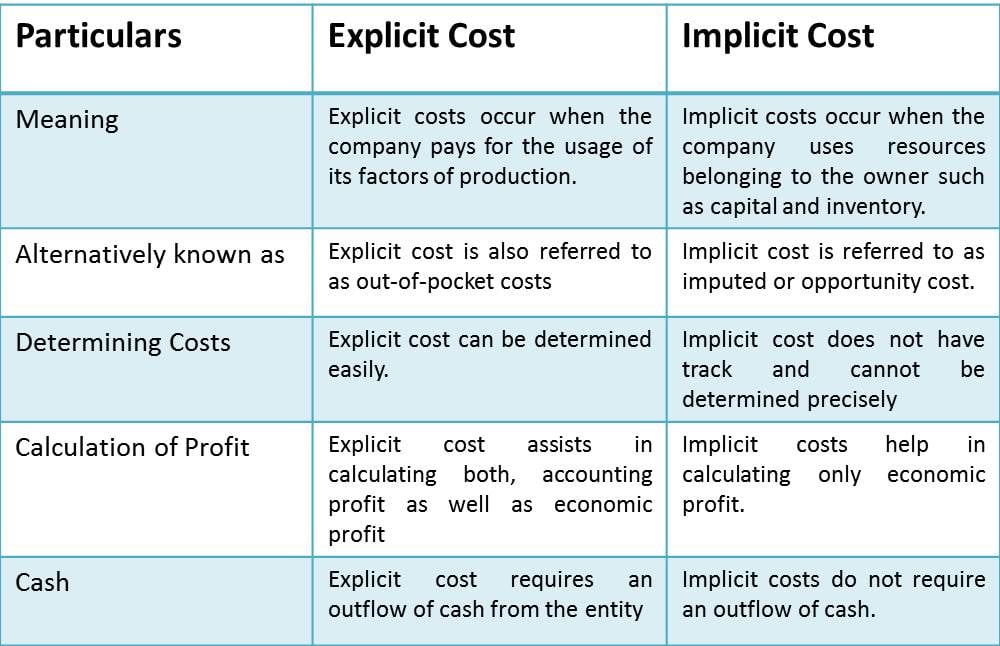
Explicit Cost Vs Implicit Cost
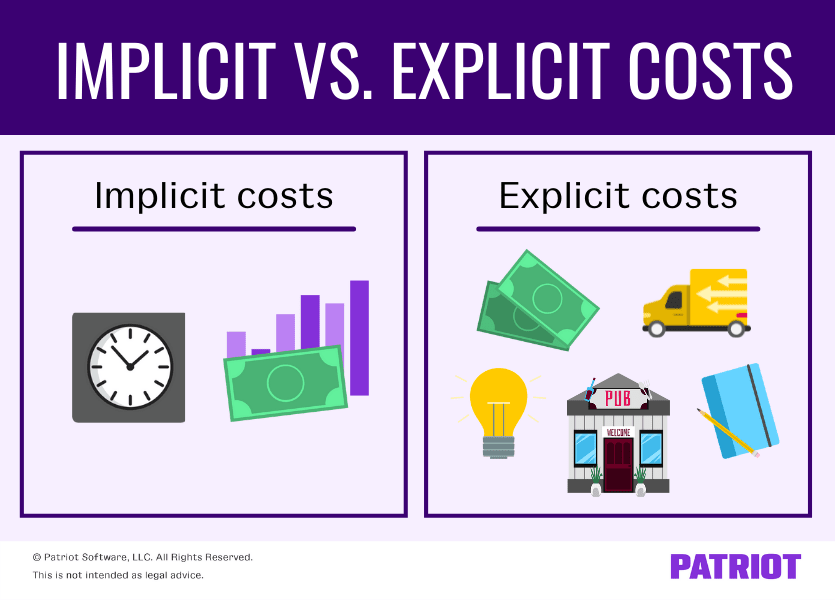
What Are Implicit Vs Explicit Costs Examples How To Calculate More
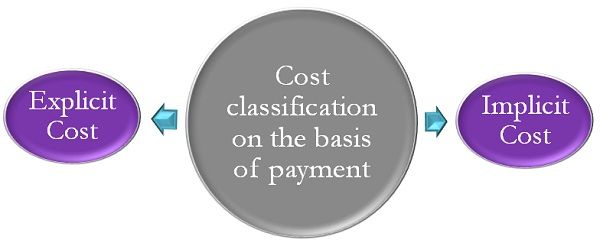
Difference Between Explicit Cost And Implicit Cost With Comparison Chart Key Differences
Implicit Cost Definition
No comments for "Implicit Costs Are Best Described as"
Post a Comment